This case simulation—grounded in patterns observed across hundreds of clinical consultations—is designed to support evidence-informed interpretation of the Foundation Zoomer Case Study Sample Report (May 2026).
Clinical Narrative
A 49-year-old female presents with 18 months of worsening fatigue, brain fog, and joint stiffness. Despite maintaining a generally healthy diet and active lifestyle, her energy levels have steadily declined, impacting both professional and personal responsibilities.
Key concerns include:
- Brain fog, most noticeable late morning and afternoon
- Joint stiffness, worse after inactivity
- Unrefreshing sleep despite 6–7 hours per night
- Approximately 15 pounds of abdominal weight gain over three years
- Irregular menstrual cycles with increased premenstrual symptoms for past 10 months
- High occupational stress and significant family responsibilities
Why This Case Matters
This case highlights a common but often underrecognized pattern in midlife women: the convergence of perimenopausal hormone changes, chronic stress physiology, gut barrier dysfunction, inflammation, and early cardiometabolic risk.
Although her symptoms could easily be attributed to perimenopause or stress alone, the Foundation Zoomer reveals a broader systems-level pattern involving hormonal resilience, thyroid conversion, intestinal permeability, metabolic function, cardiovascular risk, nutrient status, and immune activation.
Key Clinical Patterns
1. Hormonal Transition (Perimenopause)
The patient’s hormone profile reflects a perimenopausal transition with reduced ovarian and adrenal hormone output.
Key findings:
- Total Testosterone: 3.0 ng/dL — low
- Free Testosterone: 0.19 ng/dL — borderline low
- Progesterone: 0.600 ng/mL — low/suboptimal depending on cycle phase
- Estradiol: 40.0 pg/mL — suboptimal in clinical context
- DHEA-S: 64.0 µg/dL — low-normal/suboptimal
- SHBG: 56.0 nmol/L — normal
- FSH: 19.0 mIU/mL — high for follicular or luteal cycle phase, borderline high for ovulatory phase, and lower than postmenopausal range
- LH: 13.0 mIU/mL — slightly elevated for follicular or luteal phase, slightly low for ovulatory phase, and low normal for postmenopausal range
Clinical implication:
Declining ovarian and adrenal hormone production may be contributing to fatigue, reduced vitality, abdominal weight gain, cognitive changes, reduced metabolic flexibility, and muscle or skin/hair-related concerns.
2. Stress Physiology and Thyroid Adaptation
The patient’s stress and thyroid markers suggest a pattern of physiologic adaptation under chronic stress.
Key findings:
- Cortisol: 21.4 µg/dL — slightly elevated
- Reverse T3: 24.0 ng/dL — slightly elevated
- Free T3: 2.4 pg/mL — low-normal
- Free T4: 1.1 ng/dL — normal
- TSH: 3.100 µIU/mL — suboptimal
- Anti-TPO: <12 IU/mL — normal
- Anti-TG: 15.0 IU/mL — normal
Clinical implication:
This pattern suggests impaired peripheral thyroid hormone conversion, where active thyroid signaling may be reduced despite several thyroid markers remaining within conventional reference ranges. This may contribute to fatigue, cognitive slowing, reduced energy production, and difficulty sustaining physical and mental performance.
3. Gut Barrier Dysfunction and Endotoxemia
The gut barrier findings are among the strongest patterns in this case.
Key findings:
- Zonulin: 78.0 ng/mL — elevated (~1.75-fold)
- Anti-Zonulin IgG: 2.30 — elevated (~2.5-fold)
- Anti-Zonulin IgA: 1.10 — slightly elevated
- Anti-Actin IgG: 1.60 — elevated (~1.75-fold)
- Anti-Actin IgA: 0.98 — sightly elevated
- Anti-LPS IgG + IgM: 358.0 U/mL — elevated
- Anti-LPS IgA: 9.0 U/mL — normal
- hs-CRP: 3.2 mg/L — elevated (~3.5-fold)
Clinical implication:
This pattern suggests increased intestinal permeability with immune recognition of barrier-associated antigens and bacterial endotoxin exposure, with anti-LPS IgG + IgM antibodies suggesting both chronic and recent or acute exposure to gram negative bacterial products (given IgM’s role as a first responder antibody). The elevated hs-CRP adds a systemic inflammatory signal that helps connect gut barrier dysfunction with fatigue, joint stiffness, brain fog, and cardiometabolic risk.
3. Early Metabolic Dysfunction
The patient’s metabolic markers suggest early insulin resistance and impaired glycemic regulation.
Key metabolic findings:
- Fasting Glucose: 100.0 mg/dL — borderline high
- Fasting Insulin: 17.0 µU/mL — high-normal
- HOMA-IR: 4.2 — elevated (~2-fold)
- HbA1c: 5.7% — elevated/prediabetic range
- Glycated Serum Protein: 288.0 µmol/L — slightly elevated
- Leptin: 28.0 ng/mL — slightly elevated
- Adiponectin: 5.8 µg/mL — low-normal/suboptimal
Key cardiovascular findings:
- LDL Direct: 140.0 mg/dL — elevated (~1.4-fold)
- ApoB: 96.0 mg/dL — slightly elevated
- Triglycerides: 152.0 mg/dL — slightly elevated
- HDL Direct: 45.0 mg/dL — low
- Apo A-1: 124.0 mg/dL — low
- ApoB/ApoA-1 Ratio: 0.77 — elevated
- Cholesterol/HDL Ratio: 4.7 — elevated
- Total Cholesterol: 212.0 mg/dL — elevated
- Homocysteine: 12.8 µmol/L — elevated
- hs-CRP: 3.2 mg/L — elevated (~3.5-fold)
Clinical implication:
The clustering of insulin resistance, dyslipidemia, inflammation, and impaired glycemic regulation suggests metabolic inflexibility and early cardiometabolic risk, even in a patient who reports a generally healthy lifestyle.
5. Liver and Oxidative/Metabolic Burden
Liver markers add another important layer to the case.
Key findings:
- GGT: 66.0 U/L — elevated (~1.5-fold)
- ALT: 34.0 U/L — slightly elevated
- AST: 29.0 U/L — borderline high
- ALP: 92.0 U/L — high normal
- Bilirubin Total: 0.2 mg/dL — normal
- Albumin: 4.4 g/dL — normal
Clinical implication:
In the context of insulin resistance, dyslipidemia, elevated hs-CRP, and abdominal weight gain, elevated GGT with mild ALT elevation may suggest increased hepatic stress, altered glutathione demand, or increased liver and biliary burden with increased risk for metabolic dysfunction-associated fattyliver disease (MAFLD). . These findings reinforce the broader metabolic pattern.
6. Immune Activation and Eosinophil Elevation
The immune findings suggest low-grade chronic immune activation rather than an acute infectious picture.
Key findings:
- Total WBC: 4.50 x10³/µL — low-normal
- Neutrophil Count: 2.34 x10³/µL — low-normal
- Lymphocyte Count: 1.71 x10³/µL — low-normal
- Monocyte Count: 0.36 x10³/µL — mid-range
- Eosinophil Count: 0.58 x10³/µL — elevated (1.5-fold)
- hs-CRP: 3.2 mg/L — elevated (~3.5-fold)
- IL-6: 3.2 pg/mL — mid-range
- TNF-α: 3.8 pg/mL — mid-range
- RF IgM: 12.0 IU/mL — normal
- Anti-CCP3 IgG + IgA: 7.0 U — normal
Clinical implication:
Although eosinophil percentage is within range, the absolute eosinophil count is elevated along with hs-CRP. In the context of gut barrier dysfunction and systemic inflammation, this may support further clinical evaluation of allergic, environmental, parasitic, or other immune-trigger patterns, as clinically appropriate.
7. Micronutrient and Energy Burden
Several nutrient and energy-related markers may be contributing to the patient’s fatigue and reduced resilience.
Key findings:
- Vitamin D, 25-OH: 24.0 ng/mL — low
- Homocysteine: 12.8 µmol/L — elevated
- Ferritin: 42.0 ng/mL — low-normal/suboptimal
- Transferrin Saturation: 17.2% — low-normal/suboptimal
- Vitamin B12: 315.0 pg/mL — low-normal/suboptimal
- Folate: 7.4 ng/mL — normal
- Hemoglobin: 11.4 g/dL — borderline low
- Hematocrit: 37.8% — normal
Clinical implication:
Micronutrient insufficiencies, methylation burden, and impaired oxygen delivery and cellular energy production may be amplifying fatigue, inflammation, cognitive symptoms, and cardiometabolic risk.
Clinical Interpretation
This patient’s symptoms are not driven by a single system. The Foundation Zoomer reveals interconnected dysfunction across endocrine, metabolic, gut-immune, inflammatory, cardiovascular, liver, and nutrient pathways.
In this case:
- Perimenopause is reducing hormonal resilience.
- Chronic stress physiology appears to be affecting thyroid conversion and energy regulation.
- Gut barrier dysfunction may be contributing to systemic inflammation and immune activation.
- Insulin resistance and dyslipidemia are emerging alongside impaired glycemic regulation.
- Elevated GGT and ALT suggest added hepatic/metabolic burden.
- Low vitamin D, elevated homocysteine, and low-normal iron markers may further contribute to fatigue, inflammation, and cardiovascular risk.
Together, these patterns create a cycle of fatigue, brain fog, inflammation, abdominal weight gain, and metabolic decline.
Intervention Strategy
Nutritional Foundations
Focus areas:
- Emphasize whole foods and adequate protein
- Reduce refined carbohydrates and ultra-processed foods
- Increase fiber-rich vegetables and fruits
- Incorporate omega-3-rich foods
- Establish consistent meal timing to support glucose regulation
Recommended testing: Nutrient Zoomer
Gut Barrier Support
Focus areas:
- Support intestinal barrier integrity
- Reduce gut-derived inflammatory burden
- Support microbiome balance
- Address possible endotoxin-associated immune activation
Clinical considerations may include:
- L-glutamine for enterocyte repair
- Zinc carnosine for mucosal integrity
- Spore-based probiotics for microbiome balance
- Serum-derived immunoglobulins to bind endotoxins
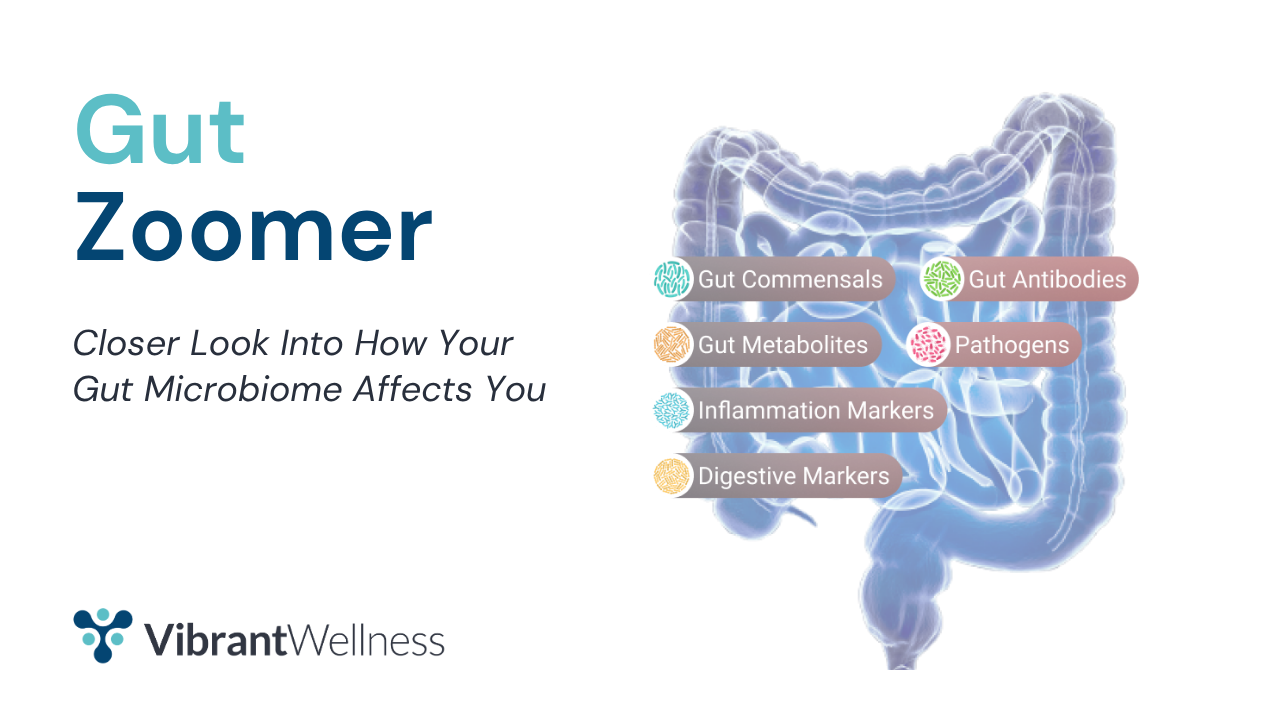
Recommended testing: Gut Zoomer, Toxin Zoomer
Metabolic and Cardiovascular Support
Focus areas:
- Improve insulin sensitivity
- Support glycemic stability
- Address lipid imbalance
- Reduce inflammatory cardiovascular risk
- Incorporate resistance training
Clinical considerations may include:
- Berberine for glucose regulation
- Omega-3 fatty acids for lipid and inflammatory balance
- Magnesium glycinate for metabolic and neuromuscular support
- Resistance training (3x/week)
- Reduce high intensity exercise/add Zone 2 exercise (~60-70% of max HR) to support healthy autonomic nervous system function and stress adaptation and resilience
Recommended testing: Cardio Zoomer, Cardio Genetics
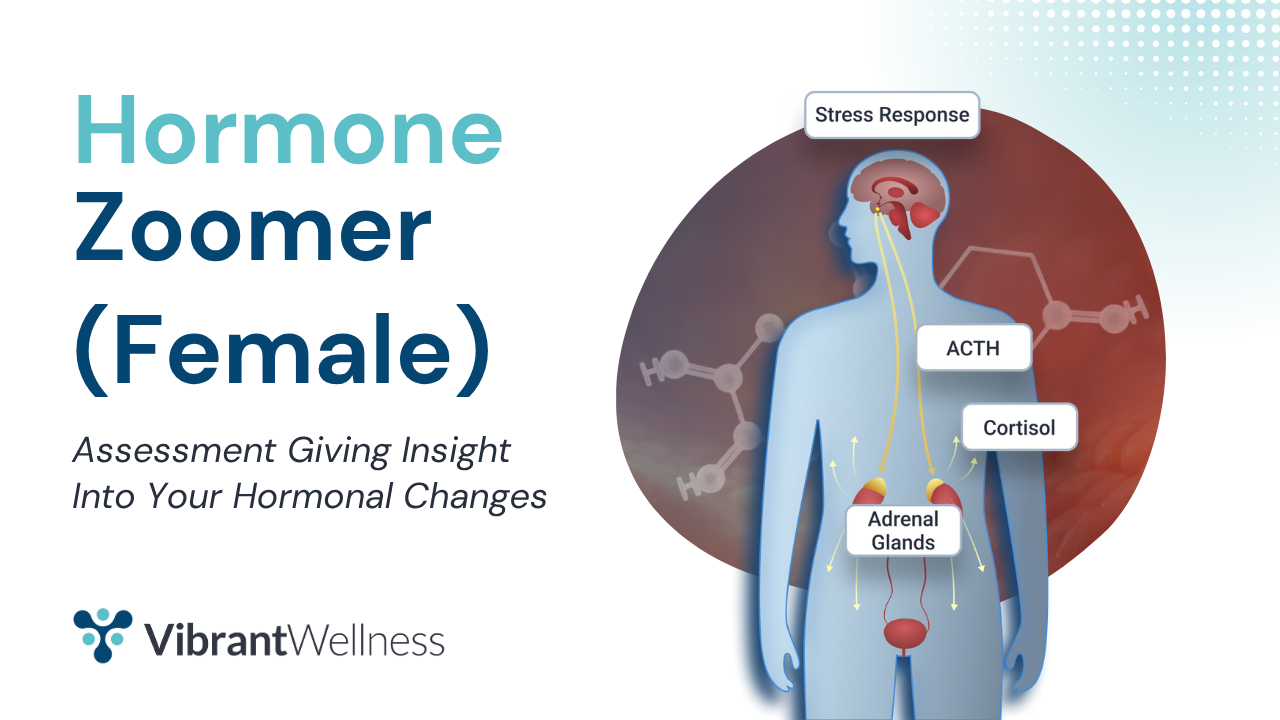
Hormone and Stress Resilience
Focus areas:
- Support stress physiology and sleep quality
- Evaluate perimenopausal hormone patterns in clinical context
- Support thyroid conversion
- Replete targeted micronutrients, as appropriate
- Address lifestyle factors affecting cortisol and metabolic resilience
Clinical considerations may include:
- Adaptogens (ashwagandha, rhodiola)
- Targeted micronutrients (vitamin D3 + K2, selenium, iodine, zinc, iron, vitamin A, B-complex)
- Sleep optimization and stress management
Why This Case Matters
This case illustrates the value of a systems-based assessment. Rather than evaluating isolated biomarkers, the Foundation Zoomer reveals how dysfunction across multiple domains—hormonal, metabolic, immune, and gut—interacts to drive patient symptoms.
The ability to identify these overlapping patterns enables clinicians to move beyond symptom management and toward targeted, root-cause-driven interventions.




%5B63%5D.jpeg)